|
Different uses for voting
need different types of voting. |

 |
STV in 2 Dimensions |
|

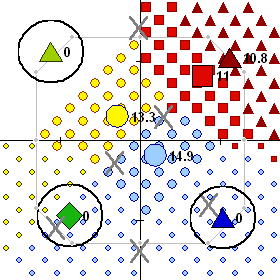
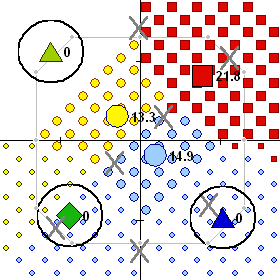
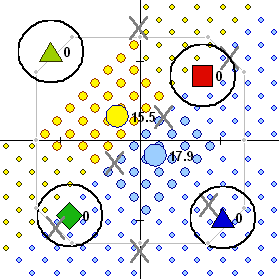
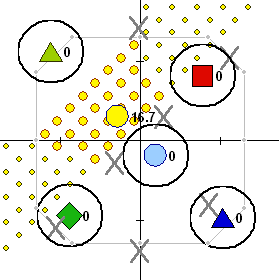
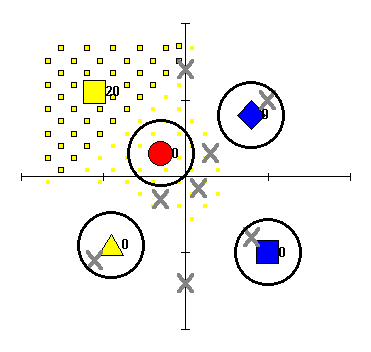
PoliticalSim™ made these charts of an STV tally. The small shapes are the voters; the big ones are the candidates. Each voter has the same color and shape as his current top choice, the closest remaining candidate.
After each round of counting the ballots, the weakest candidate loses. Her voters change color as each transfers to his next choice. A voter's shape fades when his vote helps to elect his rep(s). The playfield maps each person's place in a simulated town. Sim players move their candidates, as they try to find the hottest spots for whichever voting rule is in play.
The voters below are arranged in a checkerboard. This simple pattern makes it easy to see the votes transfer. (PoliticalSim is used more often to create uniform, random, and “normal” distributions.)
The number beside a candidate is her current share of the votes. She needs 17% to win a seat here. Through 14 steps of ballot transfers, the 13 candidates and 241 voters condense into 5 winners. Watch some pools of color grow as losers get Xs and winners get halos. |
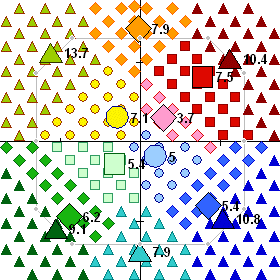
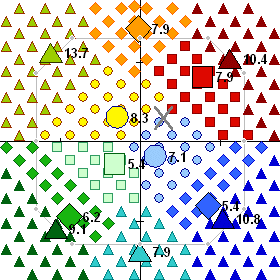
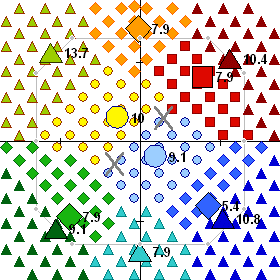
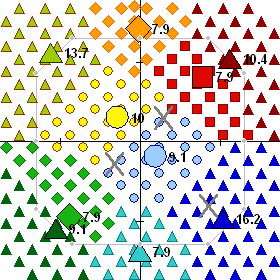
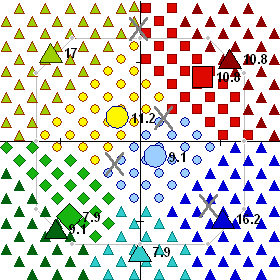
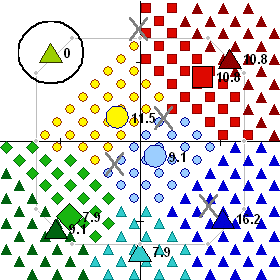
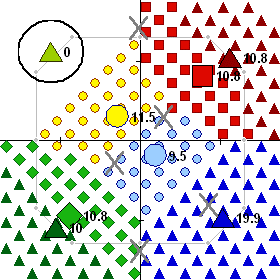
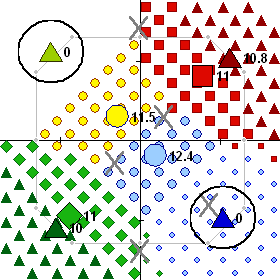
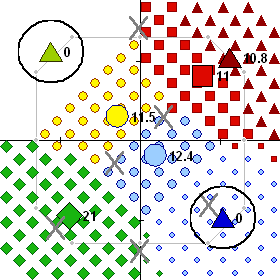
Below, in steps 1 through 6, no one wins a quota of ballots,
so the candidate with the fewest ballots is eliminated.
Steps 1 and 2 show the initial count and elimination of the first loser. X
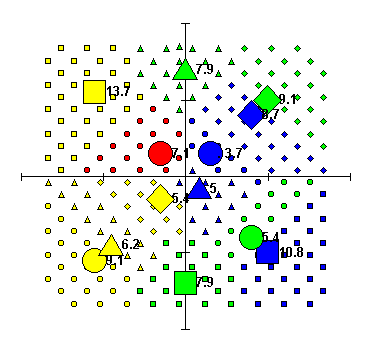
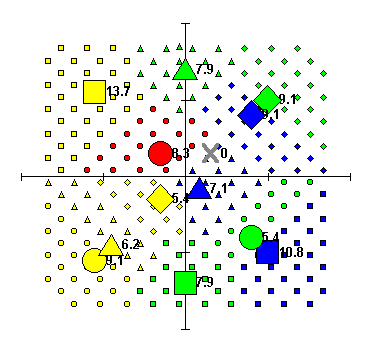
Steps 3 and 4. Votes move from a loser to help each voter's next choice.
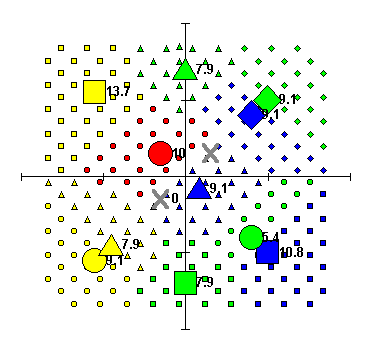
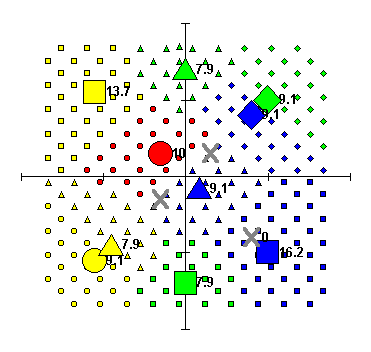
Steps 5 and 6. When a loser gets an X, her voters transfer
to stronger candidates, so some pools of color grow.
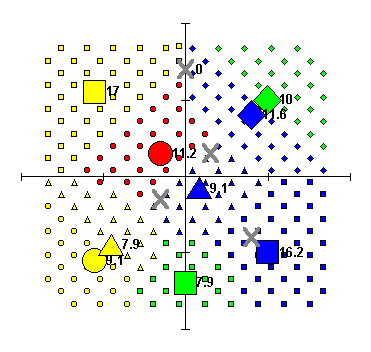
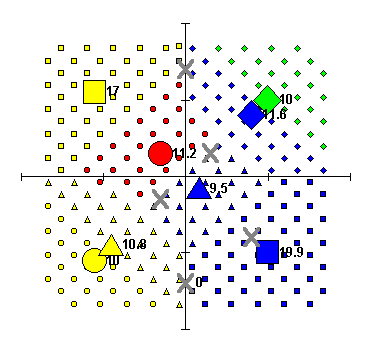
Steps 7 and 8. One candidate reaches the simple 20% quota and is elected.
Her supporters have spent their votes.
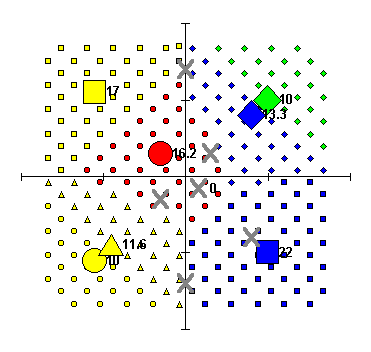
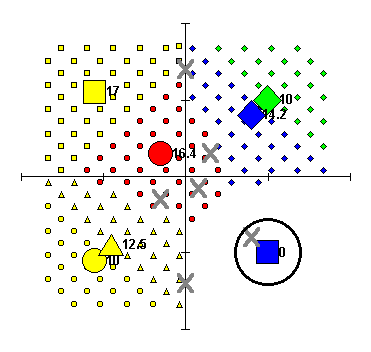
Steps 9 and 10. The second winner has more than enough votes.
A share of the excess transfers to each supporter's next choice.
Voters with weight 0.1 show as small red dots in the lower left.
One voter on the far left preferred the yellow square.
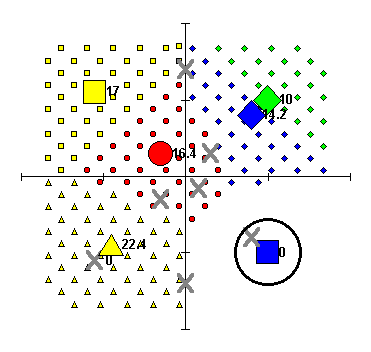
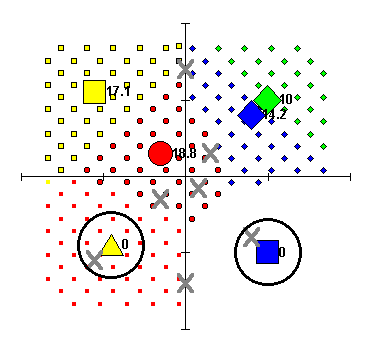
Steps 11 and 12. The green diamond loses; the blue diamond next to it wins.
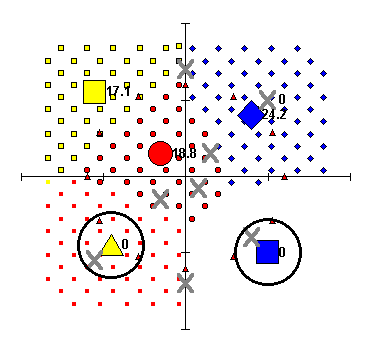
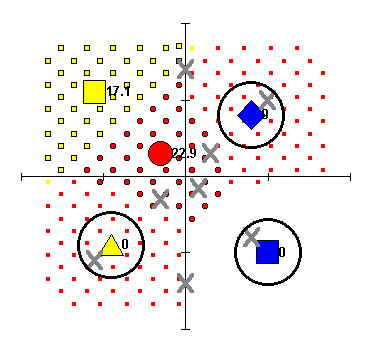
Steps 13 and 14. The last two candidates get elected.
A gray line encircles half the voters but all the reps. Is that OK?
Are the winners diverse? Are they balanced?
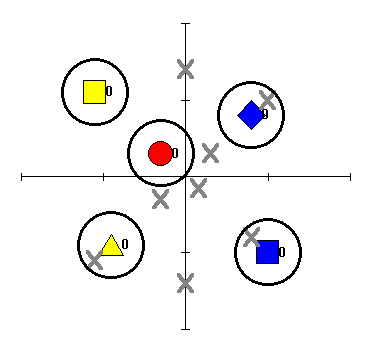
On first count, the green diamond beat the blue one. And the yellow circle topped the more moderate yellow triangle. But candidates in the central cluster lost first. Many of those ballots moved to the moderates. Then those two moderates won over their more extreme neighbors.
The blue square did win over its more moderate neighbor. But they were more central than the other pairs. In this election of 5 reps, all of the sim winners were inside a gray square that held only half of the sim voters. Is that fair to voters who are less central? Would you say any winner was extreme?
In this case STV elected a candidate close to the center but not the candidate closest to the center. More importantly, the most central STV winner needs intense support and high ranks from central voters only -- she does not need to seek the support of moderate and fringe voters. There is no one on this STV council primarily interested in broad policies. The ensemble councils explained next can do that even better. 
|


 Accurate Democracy









|
|